A Practical Guide to Denture Maintenance
A denture that felt comfortable when it was first fitted can gradually become harder to wear if daily care slips. Food particles, plaque and small changes in your gums can affect freshness, comfort and stability. This guide to denture maintenance explains the simple habits that protect your appliance, your oral health and the natural appearance of your smile.
Dentures are carefully made to support the way you speak, chew and feel about your smile. They are durable, but they are not indestructible. Gentle cleaning, safe handling and timely professional reviews can help you get the best from them for years.
Your daily guide to denture maintenance
The most useful routine is also the most consistent one. Remove and rinse your dentures after meals where practical, especially after foods that are sticky, fibrous or likely to lodge beneath a partial denture. A quick rinse removes loose debris and can make the appliance more comfortable before it has a chance to irritate your gums.
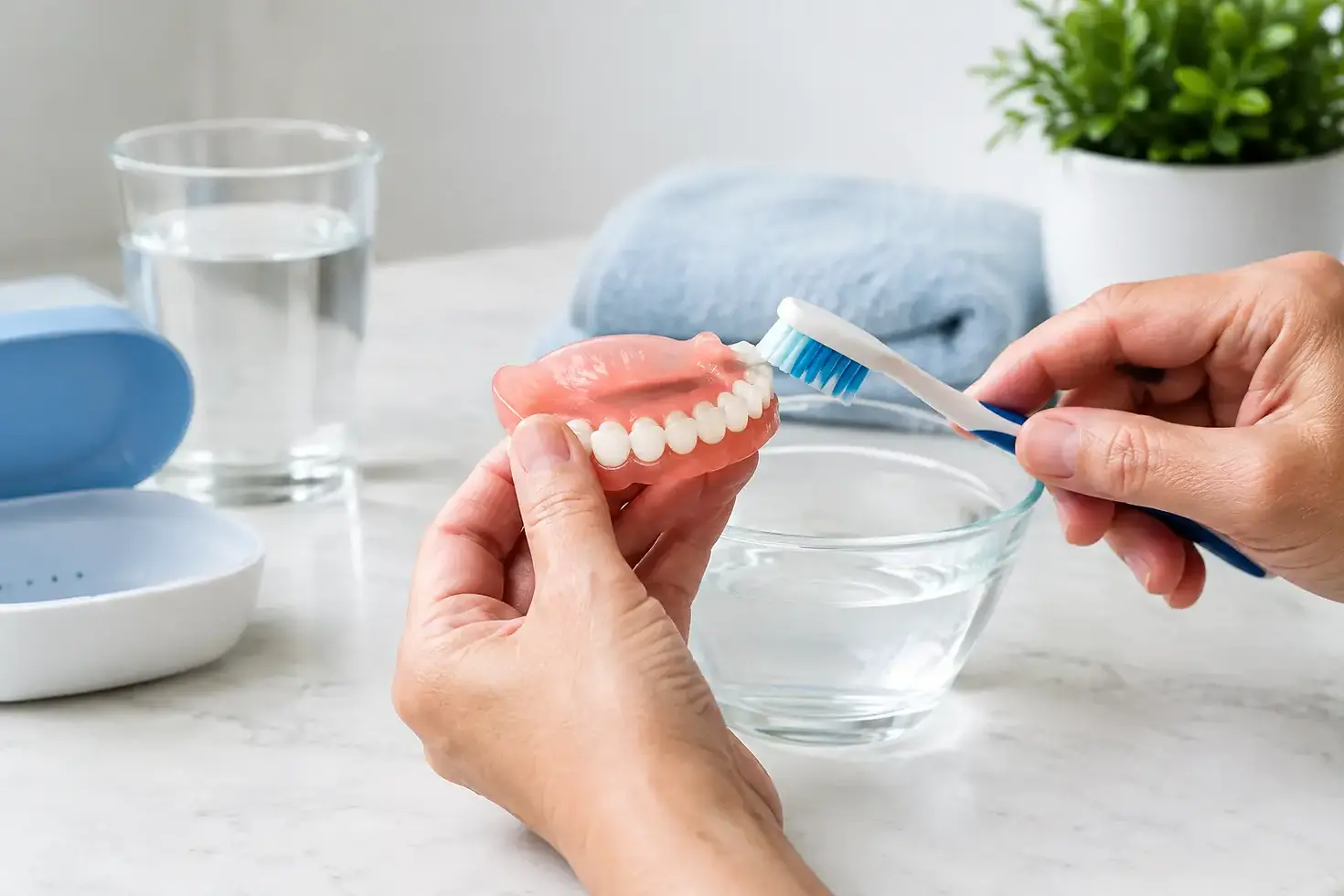
Clean your dentures thoroughly at least once a day. Use a soft denture brush and a non-abrasive denture cleanser or mild liquid soap. Brush all surfaces, including the side that sits against your gums, the teeth, clasps and any small areas where plaque may collect. Take care around thinner acrylic sections and metal clasps, as these can be damaged if bent or scrubbed too aggressively.
Ordinary toothpaste is usually too abrasive for dentures. Over time, it may create tiny scratches in acrylic teeth and the denture base. These scratches can hold stains and bacteria, making your dentures look duller and more difficult to keep fresh. Avoid bleach, harsh household cleaners and hot water for the same reason. Hot water can distort acrylic, changing the fit of an otherwise well-made denture.
After cleaning, rinse your dentures well before placing them back in your mouth. This is particularly important if you use a commercial soaking solution. Follow the product directions carefully, as different materials and appliances require different care.
Clean your mouth as well as your dentures
Removing dentures does not replace oral hygiene. Gently brush your gums, tongue and palate with a soft toothbrush each day. This helps reduce bacteria, stimulates circulation in the tissues and leaves your mouth feeling fresher.
If you wear a partial denture, pay close attention to your natural teeth, particularly around clasps and along the gumline. Brush twice a day with fluoride toothpaste and clean between teeth as advised by your dental practitioner. A partial denture depends on the health of the teeth supporting it, so protecting those teeth is part of protecting your denture.
Soaking dentures safely overnight
Most removable dentures benefit from being taken out at night, unless your dental prosthetist or dentist has given you different instructions. Your gums need time without the pressure of the denture, and removing it overnight can lower the risk of tissue irritation and denture-related fungal infections.
Keep acrylic dentures moist when they are out of your mouth. Place them in clean water or a suitable denture-soaking solution, according to the manufacturer’s directions. Never leave them somewhere dry, such as on a bedside table or wrapped in a tissue. Dryness may affect the material, while tissues are an easy way for a denture to be accidentally thrown into the rubbish.
Metal partial dentures may need more specific care, as some soaking products are not suitable for metal components. If you are unsure, ask your prosthetist which cleaner is appropriate for your appliance. It is a small detail that can help maintain both the finish and function of a metal framework.
Handle your dentures with care
Dentures can crack, chip or bend when dropped, particularly onto tiles or a hard vanity surface. Clean them over a folded towel or a basin partly filled with water. Hold them securely, but avoid gripping flexible sections or clasps too tightly.
It is also wise to keep dentures away from pets and young children. Dogs are especially drawn to the scent of dentures and can cause extensive damage in minutes. Store your appliance in a labelled denture container when it is not being worn, rather than leaving it within easy reach.
Never attempt to reshape a denture at home. Filing a rough edge, bending a clasp or using a home repair glue may seem like a quick fix, but it can compromise the fit and make a professional repair more difficult. Household glues are not designed for use in the mouth and may contain unsuitable chemicals.
Watch for changes in fit and comfort
Your jawbone and gums naturally change over time after tooth loss. Even a high-quality denture can become loose, rub in a new area or feel less stable while eating. These changes are not necessarily a sign that you have done anything wrong. They simply mean the fit needs professional attention.
Book a review if your dentures click when speaking, move while chewing, cause sore spots, feel loose, or if you need increasing amounts of adhesive to keep them in place. Pain, persistent redness, ulcers or a burning sensation should also be checked promptly. Do not continue to wear a denture that is causing significant discomfort in the hope that your mouth will “toughen up”.
A denture adjustment, reline or repair may restore comfort, depending on the issue. A reline reshapes the fitting surface of a denture so it matches your current gums more closely. In other cases, a crack, worn tooth or damaged clasp can be repaired. Your prosthetist can assess whether repair is suitable or whether a replacement will provide the safer, more comfortable result.
Reduce staining and odour
Tea, coffee, red wine and tobacco can gradually stain denture teeth, just as they can natural teeth. Rinsing after these drinks, maintaining your daily cleaning routine and arranging a professional clean when needed can help preserve a brighter, more natural-looking smile.
Odour is commonly caused by bacteria and food debris collecting on a denture or beneath it. Thorough brushing, soaking when appropriate and cleaning your tongue and gums usually make a noticeable difference. If odour persists despite good care, it may signal an issue with the denture surface, your oral tissues or a medical condition worth discussing with a health professional.
Be cautious with whitening products. Whitening toothpaste and bleaching treatments made for natural teeth will not whiten denture teeth, and abrasive products may damage the surface. If the colour of your dentures no longer suits your smile, a professional assessment can help you understand whether polishing, replacing worn teeth or making a new denture is the best option.
Eating well with dentures
Dentures become easier to manage with practice, but good habits can reduce strain on the appliance. Cut firmer foods into smaller pieces and chew on both sides of your mouth at the same time where possible. This helps keep the denture more balanced and reduces tipping.
Take extra care with hard lollies, ice, very crusty bread, chewy toffees and foods containing small bones or seeds. You do not need to avoid every favourite food forever, but it is sensible to consider the condition and type of your denture. Implant overdentures, for example, can offer improved retention for suitable patients, while conventional dentures may need a more measured approach to particularly tough foods.
If chewing has become difficult or you are avoiding social meals because your denture moves, arrange a professional review rather than changing your diet long term. Comfortable dentures should support everyday life, not restrict it.
Keep regular professional reviews
Even when your dentures feel fine, regular check-ups matter. A dental prosthetist can examine the appliance for early wear, fine cracks, changes to the bite and areas that may soon become uncomfortable. They can also check the health of your gums and, for partial denture wearers, the supporting natural teeth.
At V Smile Dental Studio, personalised denture care includes looking beyond the appliance itself. The aim is a result that feels secure, looks natural and supports your confidence in daily conversations and meals. A small adjustment made early can often prevent a more significant problem later.
Treat your dentures as the precision-made appliances they are: clean them gently, store them safely and seek help when something changes. Comfort should not be something you simply put up with.


Comments