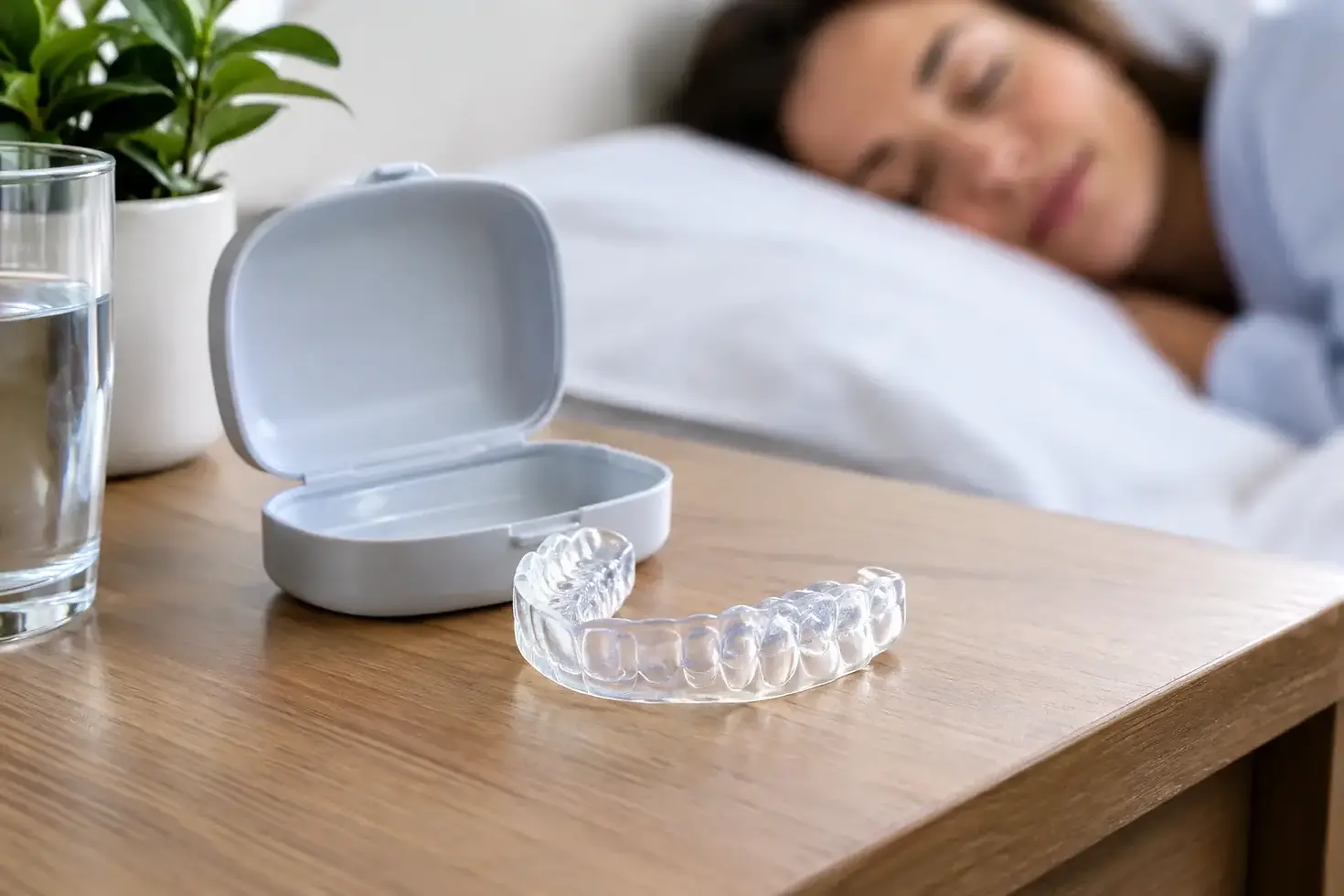
Night Guard Materials: Comfort and Protection
Waking with a tight jaw, sensitive teeth or a dull headache can make even a good night’s sleep feel unrefreshing. While night guard materials may seem like a small detail, the material used in your appliance affects how comfortable it feels, how long it lasts and how well it protects your teeth from grinding.
A well-made custom night guard, also called a grinding splint or occlusal splint, is not simply a piece of plastic placed over the teeth. It is designed around your bite, the shape of your teeth and the amount of pressure your jaw produces. The right option depends on whether you clench, grind, have existing dental work, prefer a lighter feel or need an appliance that can tolerate significant force.
Why night guard materials matter
Teeth grinding, known clinically as bruxism, can place considerable force on the teeth and jaw joints. Over time, this may contribute to worn enamel, chipped teeth, cracked fillings or crowns, muscle fatigue and jaw discomfort. A night guard creates a protective barrier between the upper and lower teeth, helping to spread biting forces more evenly.
However, protection is only part of the picture. A guard that feels bulky, irritates the gums or moves during sleep is less likely to be worn consistently. This is why material selection and careful fabrication matter. The aim is to create an appliance that is strong enough for your bite, refined enough to be comfortable and fitted closely enough to stay secure through the night.
It is also worth separating a night guard from a sports mouthguard. A sports mouthguard is designed to absorb impact from a ball, elbow or fall. A night guard is designed to manage repeated clenching and grinding forces. They may look similar, but their material thickness, design and clinical purpose are different.
The main night guard materials
Soft thermoplastic materials
Soft night guards are typically made from flexible thermoplastic materials, often ethylene vinyl acetate, or EVA. They have a slightly cushioned feel and are usually clear or translucent. For someone who is new to wearing a splint, a soft appliance can feel less confronting than a hard acrylic guard.
This material may suit people with mild grinding, temporary symptoms or a strong preference for a softer feel. It can also be useful where comfort is the immediate priority, particularly when a patient has sensitive teeth or is adjusting to wearing an appliance at night.
The trade-off is durability. Soft material can show tooth marks more quickly in people who clench heavily. Some patients also find that biting into a softer surface encourages more chewing or clenching. It is not automatically the best choice simply because it feels gentle at first.
Hard acrylic materials
Hard acrylic is a common choice for custom occlusal splints because it is stable, durable and can be adjusted precisely. It is generally made from clear rigid acrylic and is shaped to provide an even biting surface. This helps the practitioner assess and refine how the upper and lower teeth meet while the guard is in place.
For moderate to heavy grinders, a hard acrylic splint often provides reliable long-term protection. It resists wear better than a soft material and can be polished to a smooth finish that is easy to clean. Its rigid structure also allows careful bite adjustments, which can be valuable for patients with uneven tooth wear, complex bite patterns or jaw symptoms.
The main adjustment is getting used to the firmer feel. A properly designed acrylic splint should not feel painfully tight or excessively bulky, but it may take several nights for your mouth to adapt. The initial settling-in period is usually worthwhile when the appliance is well fitted and suited to the level of grinding.
Dual-laminate materials
Dual-laminate guards combine a hard outer surface with a softer inner layer against the teeth. This approach offers a balance between a comfortable fit and a more durable biting surface. The soft inner layer can make insertion more comfortable, while the hard exterior is better able to withstand repeated contact from the opposing teeth.
This material can be a practical option for people who need more protection than a soft guard alone can offer but are concerned about the feel of a fully hard appliance. It may also suit patients who have had difficulty tolerating rigid splints in the past.
As with any appliance, the design matters as much as the material. A dual-laminate guard still needs to sit accurately over the teeth and provide appropriate bite contact. If the soft lining compresses or wears unevenly, the appliance may require review or replacement sooner than a hard acrylic splint.
Thin hard materials for a lighter feel
Some modern digital splints are fabricated from strong, thinner hard materials. These can be an excellent option for patients who want a less bulky appliance without sacrificing the stability that a hard surface provides. Digital design and fabrication can help create a closely fitting guard with controlled thickness in the areas that need protection.
A thinner appliance is not suitable for everyone. Heavy grinders may still need extra material in high-pressure areas, while people with certain bite relationships may benefit from a more substantial design. The best result comes from matching the material and thickness to the individual rather than choosing the thinnest guard available.
Choosing the right material for your bite
There is no single best night guard material for every person. Someone with occasional stress-related clenching may be well served by a softer option, while a person who has worn through enamel, fractured fillings or regularly wakes with jaw pain may require the strength and adjustability of hard acrylic.
Your dental history matters too. Crowns, veneers, implants, bridges and dentures can all influence the design of a splint. The appliance needs to protect natural teeth and restorations without placing unwanted pressure on them. If you have recently had dental treatment, your guard may need to be reviewed or remade as your bite changes.
Comfort is equally important. A guard should fit snugly without pinching, rubbing the gums or feeling loose. It should also allow you to close your mouth naturally. If it causes persistent pain, makes your jaw feel worse or no longer fits as it once did, do not simply stop wearing it and put up with the symptoms. A professional adjustment may be all that is needed.
Why custom fabrication makes a difference
Over-the-counter guards can be tempting because they are readily available, but they are generally designed as a one-size-fits-most solution. Boil-and-bite products can be difficult to shape evenly, may feel bulky and can create an uneven bite surface. For a person with significant grinding, this may mean limited comfort and inconsistent protection.
A custom appliance is made from impressions or digital scans of your teeth. This gives the dental prosthetist a detailed starting point for creating a close, stable fit. The biting surface can then be designed for your individual needs, rather than relying on a pre-formed shape.
At V Smile Dental Studio, this personalised approach helps ensure a splint is considered as part of your wider oral comfort, not just as a quick barrier between the teeth. Material choice, thickness, fit and bite balance are assessed together to support a practical and comfortable outcome.
Looking after your night guard
Even the most durable materials need regular care. Rinse your guard in cool water after wearing it and brush it gently with a soft toothbrush. Avoid hot water, as heat can distort thermoplastic materials and affect the fit. Store the guard dry in its ventilated case rather than leaving it wrapped in tissue, where it can easily be misplaced or damaged.
Bring your appliance to check-ups or review appointments, especially if you notice cracks, deep bite marks, rough edges, looseness or a change in the way your teeth meet. Night guards do wear over time, and replacement timing depends on the material, your grinding force and how consistently you use it.
The most suitable guard is the one you can comfortably wear night after night while giving your teeth the protection they need. A tailored assessment can turn an uncomfortable, short-lived appliance into a dependable part of caring for your smile.


Comments