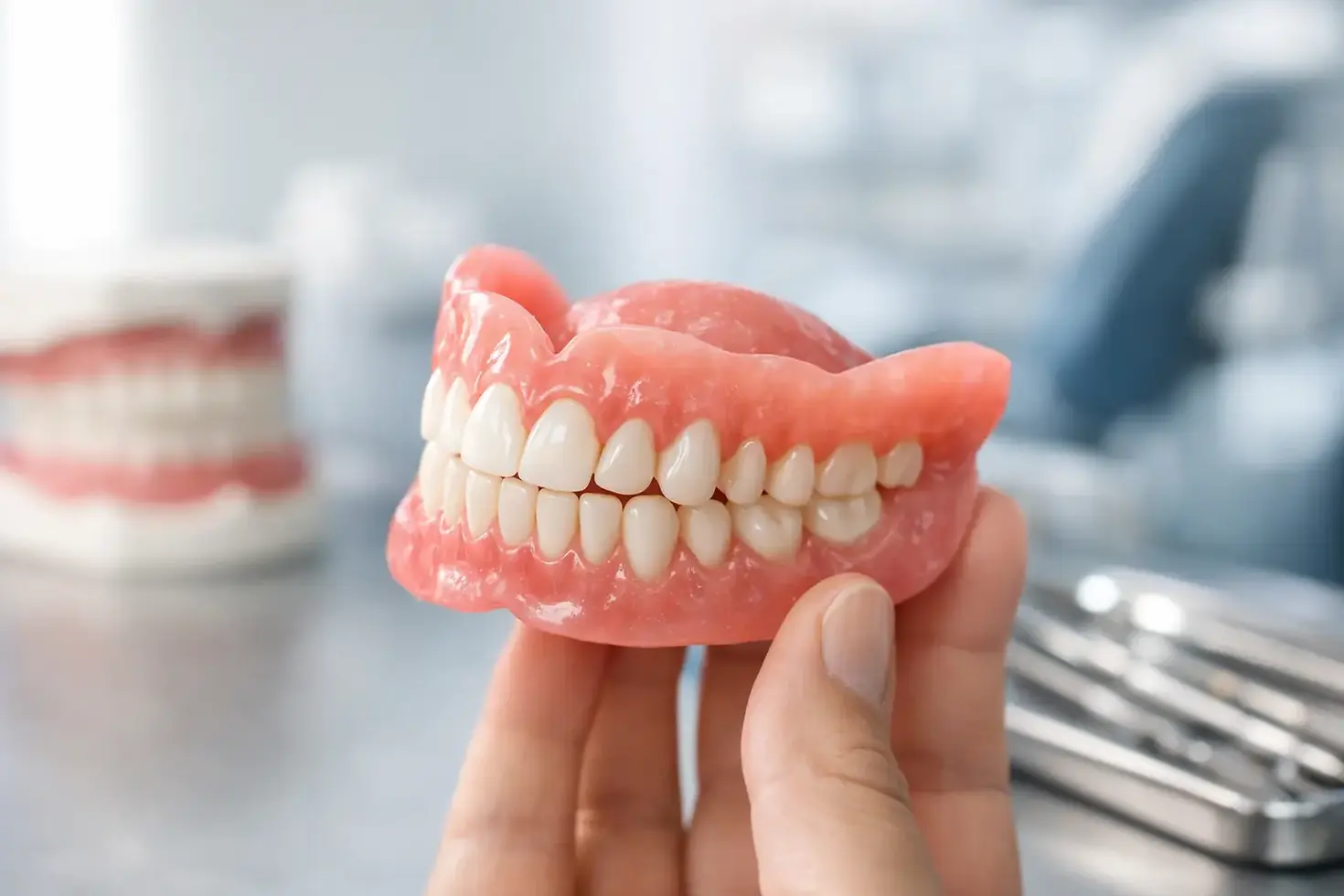
What Is a Full Acrylic Denture?
Losing all the teeth in an upper or lower arch changes more than your smile. It affects how you eat, speak, and feel in day-to-day life. If you have been asking what is full acrylic denture treatment, the simple answer is this: it is a removable denture made entirely from acrylic material, designed to replace a full set of missing teeth and restore both function and appearance.
For many people, a full acrylic denture is the most practical starting point when all natural teeth in one arch, or both arches, need to be replaced. It is a well-established option that can be made to look natural, feel comfortable, and support better confidence when it is carefully designed around the individual rather than treated as a one-size-fits-all appliance.
What is a full acrylic denture made of?
A full acrylic denture is made from a durable acrylic resin that forms both the pink denture base and the tooth structure attached to it. The base is shaped to sit over your gums, while the acrylic teeth are arranged to suit your bite, facial features, and smile line.
Because the entire denture is acrylic, it is often lighter in cost than some alternative prosthetic options. It is also relatively straightforward to adjust, repair, or modify if your mouth changes over time. That matters, because gum and bone shape can continue to shift after teeth are removed, especially in the first months and years.
This type of denture can be made as a complete upper denture, a complete lower denture, or a full set for both arches. In some cases, it can also be designed as an immediate denture, which means it is fitted soon after tooth removal so you are not left without teeth during healing.
How a full acrylic denture stays in place
People often assume dentures somehow clip into the mouth, but a conventional full acrylic denture usually relies on close adaptation to the gums and surrounding tissues. An upper denture often achieves better suction because it covers a broader surface area across the palate. Lower dentures can be more challenging, as the tongue, cheeks, and smaller ridge shape tend to create more movement.
That is why precision matters. The fit, bite balance, tooth positioning, and border shape all influence how stable the denture feels. A well-made denture should not feel bulky or obviously artificial. It should support speech, help with eating softer foods comfortably, and look in proportion with your face.
Some patients with looser lower dentures eventually choose implant overdentures for added retention. That does not mean a full acrylic denture is a poor option. It simply means the best solution depends on anatomy, budget, expectations, and long-term goals.
Who is a full acrylic denture best suited to?
A full acrylic denture is commonly suited to adults who have lost all teeth in one or both arches, or who need to have remaining teeth removed due to extensive damage, gum disease, or longstanding dental problems. It can also be a sensible option for someone replacing an old denture that no longer fits well or looks natural.
In practical terms, it often suits patients who want a cost-effective full tooth replacement solution without moving straight to implant treatment. It can also be a good choice for people who value a removable appliance that is easier to clean outside the mouth.
That said, suitability is not just about missing teeth. Jaw shape, soft tissue support, bone volume, gag reflex, dry mouth, and bite relationship all play a part. A person with significant ridge resorption, for example, may still wear a full acrylic denture, but may need more careful planning and realistic expectations around retention, particularly in the lower jaw.
What are the benefits?
The biggest advantage of a full acrylic denture is accessibility. It offers a full-arch replacement option that is generally more affordable than fixed implant solutions and can be customised to improve both function and appearance.
Acrylic dentures also allow flexibility in treatment. They can often be adjusted if pressure spots develop, relined when the fit changes, and repaired if chipped or cracked. For patients going through healing after extractions, that adaptability is valuable.
There is also the aesthetic side. When designed thoughtfully, a full acrylic denture can restore facial support, reduce the sunken look that often follows tooth loss, and create a smile that feels more natural and age-appropriate. Good denture design is not just about replacing teeth. It is about restoring harmony to the face.
The trade-offs to understand
No denture option is perfect, and honest expectations make for better outcomes. Full acrylic dentures are removable, so they do not feel exactly like natural teeth. There is usually an adjustment period while your cheeks, tongue, and speech adapt to the new appliance.
Chewing ability also improves with practice, but it may not match the force or confidence of natural teeth or implant-supported options. Hard, sticky, or very chewy foods can still be difficult for some wearers.
Fit changes over time are another reality. As gums and underlying bone remodel, a denture that once fit well may begin to loosen. This is why reviews, relines, or a replacement denture may become necessary. A quality denture is an investment, but it still needs maintenance.
What the treatment process usually involves
If you are wondering what is full acrylic denture treatment like from start to finish, it usually begins with an assessment of your mouth, facial structure, bite, and goals. If teeth need to be removed, timing and healing stages are considered as part of the plan.
Measurements and impressions are taken to capture the shape of your gums and jaws. From there, the denture is designed with attention to tooth size, tooth shade, lip support, bite position, and smile appearance. In many cases, there is a try-in stage so the look and function can be checked before the final denture is completed.
This part matters more than many people realise. A denture is not simply made to fill space. It needs to work with the way you speak, smile, and close your jaws. Small changes in tooth placement can affect comfort, appearance, and stability.
Once fitted, follow-up adjustments are often needed. That is normal. New dentures commonly create a few sore spots at first, and fine-tuning helps improve comfort as your mouth adapts.
Living with a full acrylic denture
The first few weeks are a learning period. Most patients need time to get used to speaking clearly, eating with more control, and managing the feel of a new appliance. Starting with softer foods and chewing evenly on both sides usually helps.
Cleaning should become part of your daily routine. A full acrylic denture needs to be brushed with appropriate cleaning products and handled carefully, as acrylic can break if dropped. It should also be kept moist when out of the mouth so it does not dry out or distort.
Regular check-ups remain important, even if you no longer have natural teeth in that arch. Dentures should be reviewed for fit, wear, and any signs that the supporting tissues are under strain. If a denture becomes loose, painful, or noticeably worn, it is better to address it early rather than put up with it.
What is full acrylic denture care worth paying attention to?
Long-term comfort often comes down to maintenance. An older denture may still look acceptable at a glance but can gradually lose its fit, bite balance, and support. This can contribute to sore gums, difficulty chewing, and a smile that no longer sits naturally.
Acrylic teeth can also wear down over time, which affects how the jaws meet and how efficiently you chew. If you have had the same denture for many years, discomfort may not mean dentures in general are the problem. It may simply mean your current one is no longer matched to your mouth.
For patients in Melbourne’s south-east and the Mornington Peninsula, having access to an experienced dental prosthetist can make the process feel far less overwhelming. Careful planning, good communication, and a denture designed around your face rather than a stock formula can make a noticeable difference to the final result.
A full acrylic denture is, at its best, a balance of comfort, practicality, and appearance. The right one should help you eat more confidently, speak more naturally, and smile without feeling like you have to hide. If you are considering one, the most useful next step is not guessing from photos or old assumptions. It is getting personalised advice about what will actually work in your mouth.


Comments